
Compassionate End-of-Life Care: Noticing – and Responding – With Intention
Compassionate End-of-Life Care: Noticing – and Responding – With Intention
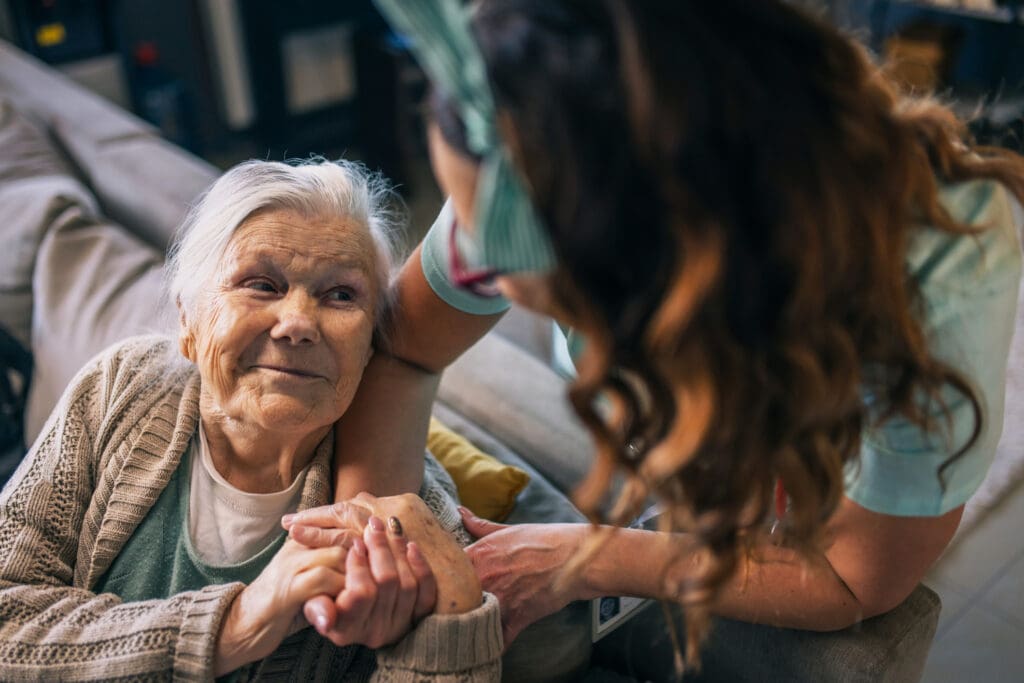
For families navigating a dementia diagnosis, one of the hardest realities is this: as the disease progresses, a loved one’s ability to describe what they’re feeling often fades long before their need for comfort does. A person living with advanced dementia may lose the words for “my back hurts” or “I’m scared,” even as the discomfort or fear remains very real. It means someone else has to notice it for them.
This is where truly compassionate end-of-life care begins: with attention – to the smaller signals that something has shifted, as much as to the symptoms that are easy to see.
When Words Are No Longer Available
Dementia gradually affects the parts of the brain responsible for language, memory, and processing sensation. In later stages, a person may lose the ability to verbalize pain, hunger, temperature discomfort, or anxiety in words altogether. Research from the National Institutes of Health notes that pain and distress in people with advanced dementia are frequently under-recognized and under-treated, in part because caregivers and clinicians have traditionally relied on verbal self-report – a form of communication that may become increasingly difficult as dementia progresses.
Discomfort often shows up differently instead: a change in facial expression, a new resistance to being touched, restlessness, a shift in appetite, or a sound that wasn’t there before. Recognizing these cues takes familiarity as much as clinical training – knowing a person well enough to notice when something about them feels different.
Why Noticing Earlier Matters
Recognizing changes early gives a person the best chance at comfort throughout every stage that follows. When a subtle change goes unnoticed for weeks, a treatable source of pain can quietly become a source of prolonged suffering. When it’s caught early, care can adjust – a medication reviewed, a routine modified, a posture supported – often before real distress sets in.
This is also where family involvement matters most. Families often carry decades of knowledge about a loved one’s habits, expressions, and quirks. Paired with a care team’s day-to-day observation, that history becomes a powerful early-warning system. Noticing is a shared responsibility, carried together by families and caregivers alike.
What Comfort-Focused Care Looks Like in Memory Care
In a memory care setting, comfort-focused care is built into the rhythm of daily life, long before a crisis arrives:
- Consistent, familiar caregivers who see a resident often enough to notice subtle changes in mood, movement, or expression.
- Regular communication with families, so observations from home and observations from the community can be compared and understood together.
- Attention to the whole person – physical symptoms alongside emotional comfort, dignity, and a sense of calm and safety.
- Collaboration with hospice and medical partners when the goal shifts from treatment to comfort, ensuring that care remains gentle, unhurried, and centered on the resident’s peace.
At the center of all of this is being present consistently enough that change is noticeable and responding to it with care.
Derek Harris, Vice President of Health and Wellness at Artis Senior Living, explains it this way. “As a society, we put tremendous thought and care into welcoming someone into the world. We believe the end of life deserves the same level of attention – honoring the entirety of a person’s lifetime, recognizing when they need something different today from what they did yesterday, and ensuring the moment is met with compassion, dignity, comfort, and presence.”
A Steady Presence, Especially Near the End
End-of-life care is, at its heart, an act of listening – even when the person can no longer tell you in words what they need. It asks caregivers and families to pay closer attention, to trust what they observe, and to act on it with compassion rather than urgency.
At Artis, this kind of attentiveness is part of how care is practiced from the beginning, every day, rather than only in the final ones. When the end-of-life journey arrives, it feels like a continuation of care that was already there – familiar, honest, and centered on comfort. That is what compassionate care looks like, The Artis Way.
Sources:
Assessment and management of pain in persons with dementia,
Caregiver–provider communication about pain in persons with dementia